New School Timings Announced to Protect Students from Smog
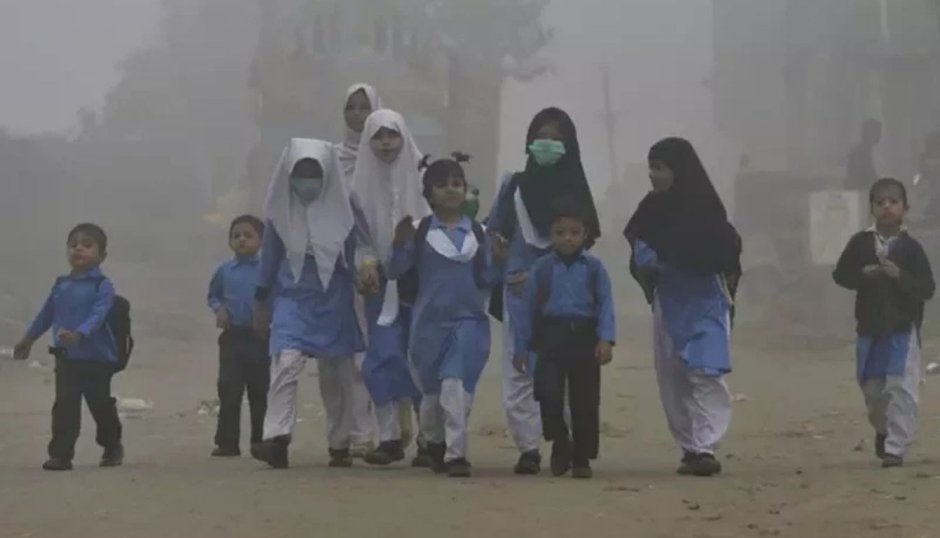
As the smog crisis worsens across Punjab, the Punjab Education Department has officially revised school timings throughout the province. According to a notification issued on Sunday, no public or private school will be allowed to open before 8:45 a.m. The new schedule took effect on October 27, 2025, and will remain in place until April 15, 2026.
Education Minister Rana Sikandar Hayat stated that the change aims to minimize students’ exposure to toxic air during early morning hours when smog levels are at their peak. Schools violating this directive could face hefty fines ranging from Rs100,000 to Rs1 million.
Under the new schedule, single-shift schools will operate from 8:45 a.m. to 1:30 p.m., while double-shift schools will run in two sessions — 8:45 a.m. to 1:30 p.m. and 1:00 p.m. to 4:00 p.m. On Fridays, schools will close an hour earlier.
Air Quality Plummets to Dangerous Levels
Punjab’s major cities — including Lahore, Kasur, and Dera Ghazi Khan — are currently blanketed in thick smog, with air quality indices hitting hazardous levels. According to IQAir, the global air monitoring agency, the AQI reached 500 in several areas, ranking Punjab among the most polluted regions in the world.
Health experts have warned of a surge in respiratory illnesses, particularly among children and the elderly, as visibility continues to drop and pollution levels rise alarmingly.
Government Launches Anti-Smog Campaign
To combat the crisis, the Punjab government has imposed an immediate ban on vehicles without green stickers or valid fitness certificates. The official smog alert season will run from November 1, 2025, to January 31, 2026, during which strict inspections will target smoke-emitting vehicles across the province.
Meanwhile, the Pakistan Environmental Protection Agency (Pak-EPA), in collaboration with the Islamabad Capital Territory (ICT) Administration, has sealed several marble factories near Sector B-17, Islamabad, for violating environmental laws. Officials confirmed that these units were major contributors to airborne dust and particulate emissions, worsening the region’s air quality.
Public Health at Stake
Experts emphasize that the smog crisis demands immediate and sustained policy action. As Punjab battles both industrial and vehicular pollution, authorities are calling for stricter enforcement, cleaner technologies, and public awareness campaigns to protect citizens from this growing environmental disaster.