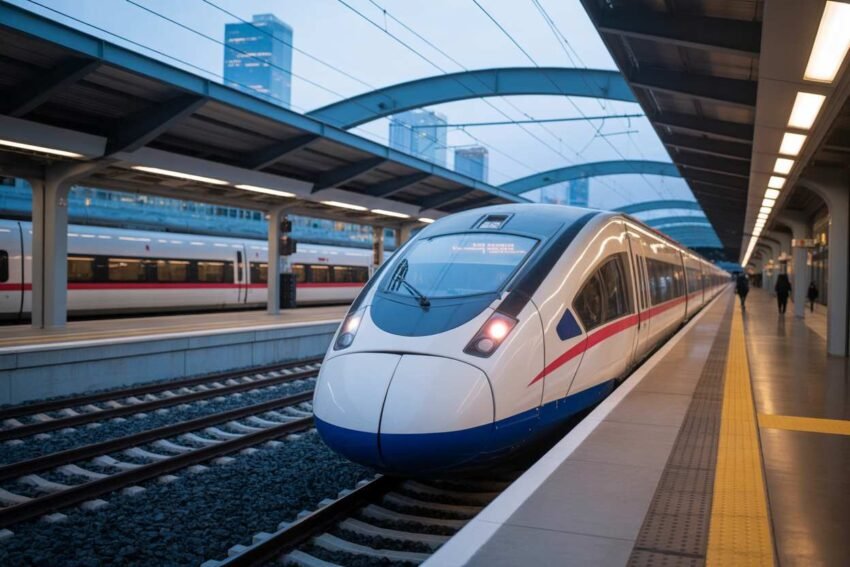
The European Commission has announced an ambitious €550 billion plan to revolutionize rail travel across Europe, aiming to connect major cities faster than ever before. The initiative promises not only to boost regional economies but also to make rail transport a strong, sustainable alternative to air travel.
A Vision for Fast, Connected Europe by 2040
Imagine starting your morning with a croissant in Paris and enjoying lunch in Madrid — all within a six-hour train ride. This dream could become a reality by 2030 under the EU’s new high-speed rail network plan. The Commission’s vision aims to drastically reduce travel times between major European capitals and improve access to remote regions.
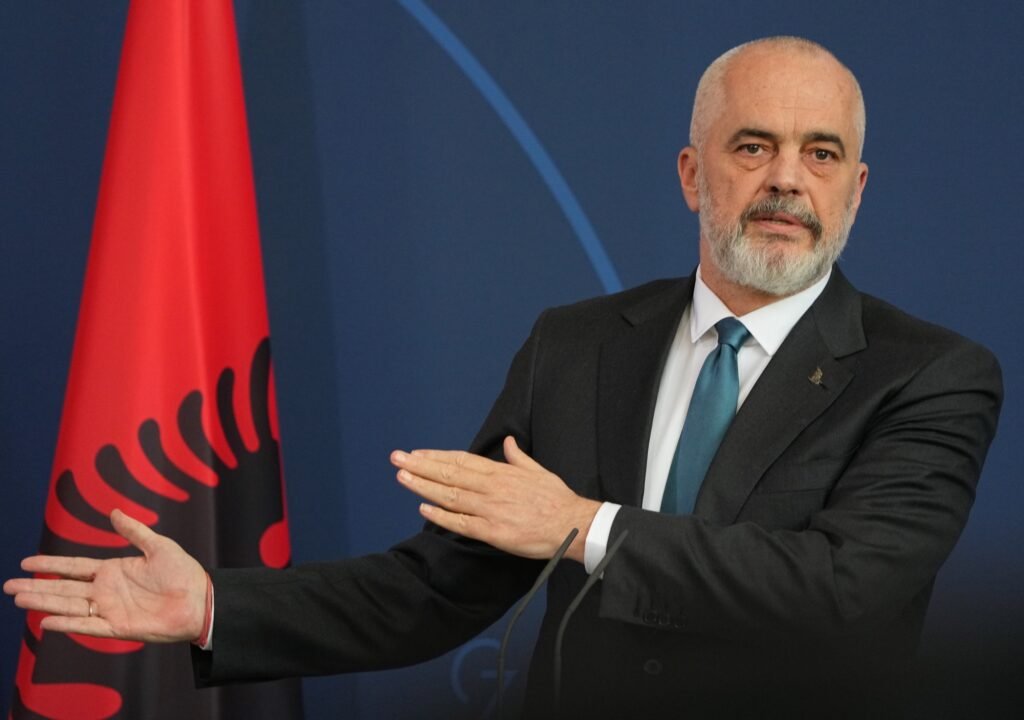
EU Commissioner for Sustainable Transport and Tourism, Apostolos Tzitzikostas, said, “High-speed rail is still concentrated in a few member states like Spain, France, Italy, and Germany, while Central and Eastern Europe remain poorly connected.” He added that shorter travel times — such as a four-hour Berlin-to-Copenhagen trip instead of seven — would make trains more attractive than planes.
Major Reductions in Travel Time
By 2030, journeys such as Paris–Rome are expected to drop from nearly 11 hours to under 9 hours, while Copenhagen–Berlin will fall to just four hours. By 2035, Prague–Vienna could take only 2 hours 15 minutes, and Vienna–Warsaw just over 4 hours. The final phase, due by 2040, will see Budapest–Bucharest reduced from 15 hours to around six.
The plan also includes new cross-border routes, like a Tallinn-to-Warsaw line passing through Riga and Vilnius, taking just under eight hours, and a Lisbon-to-Paris route via Madrid, expected to take around nine hours.
Making Rail Travel Affordable and Competitive
While trains offer greener transport, cost remains a barrier. A Greenpeace report in 2023 found that train fares are, on average, twice as expensive as flights. The EU plans to address this by encouraging competition among operators, similar to successful models in Spain and Italy, which have lowered prices and increased passenger numbers.
Additionally, a new digital ticketing system will allow passengers to book cross-border journeys with one click by 2026, making international train travel simpler and more accessible.
A Sustainable Leap for Europe’s Future
The €550 billion investment combines public and private funding and aims to strengthen Europe’s train manufacturing capacity, reducing current wait times of up to six years for new trains.
This ambitious project reflects the EU’s long-term goal: a greener, faster, and more united Europe — where rail travel could redefine how Europeans move, work, and connect.