A wave of anti-immigrant unrest has shaken Belfast, raising serious concerns about public safety, racism, and social cohesion in Northern Ireland. The violence followed a knife attack in east Belfast that authorities say involved a Sudanese national, but the unrest quickly escalated into attacks on ethnic minority communities, businesses, and homes.
What Triggered the Belfast Riots?
The unrest began after a 30-year-old Sudanese man was charged with attempted murder following a knife attack that left a local resident with severe injuries. Police say the victim remains hospitalized with life-changing injuries.
Community leaders and members of Belfast’s Sudanese population strongly condemned the attack. Many stressed that one individual’s alleged actions should not be used to blame an entire community.
Sudanese community condemns the attack
Local Sudanese residents publicly rejected the violence and urged people not to hold an entire ethnic group responsible for the actions of one suspect.
Families sought emergency shelter
Several minority families reported feeling unsafe and were moved to temporary accommodation with the help of charities and local residents.
Riots spread beyond the original incident
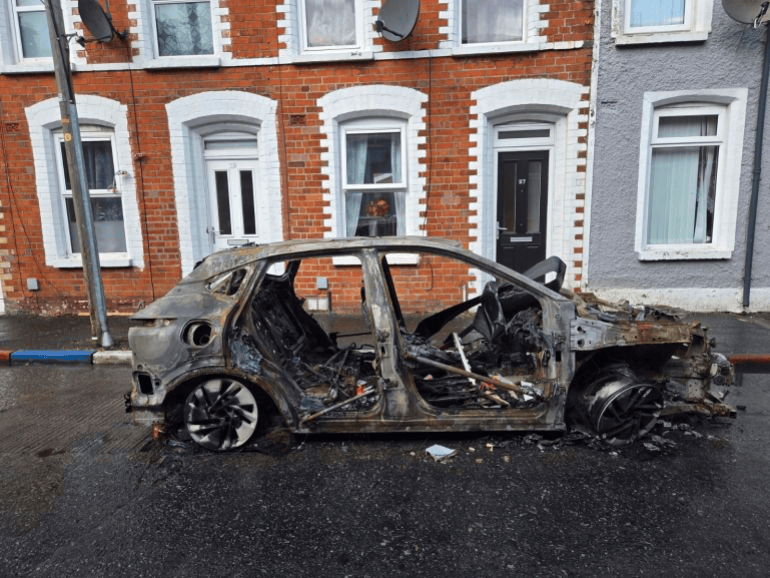
Crowds targeted homes, shops, and vehicles in areas where they believed migrants or ethnic minorities were living.
Businesses Closed Amid Rising Tension
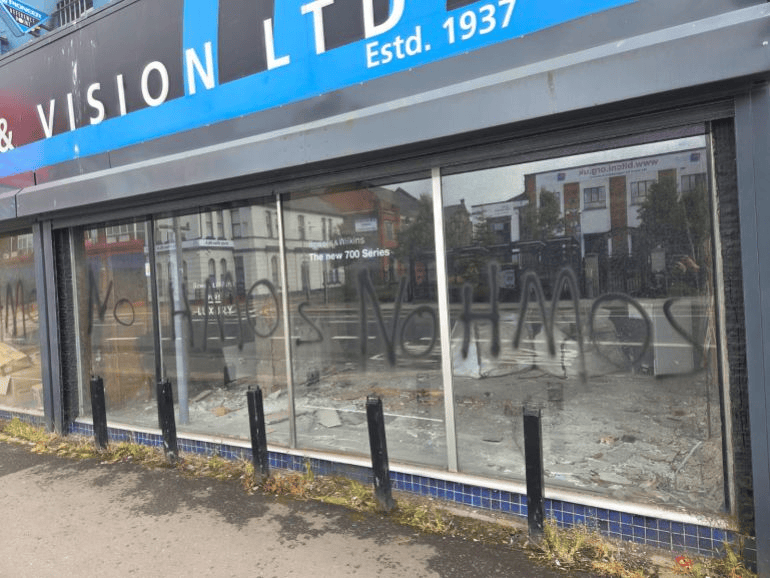
On the evening after the attack, many businesses in Belfast shut down early after threatening messages circulated online. Social media posts called on people to gather for demonstrations and listed locations across Belfast and other parts of the United Kingdom.
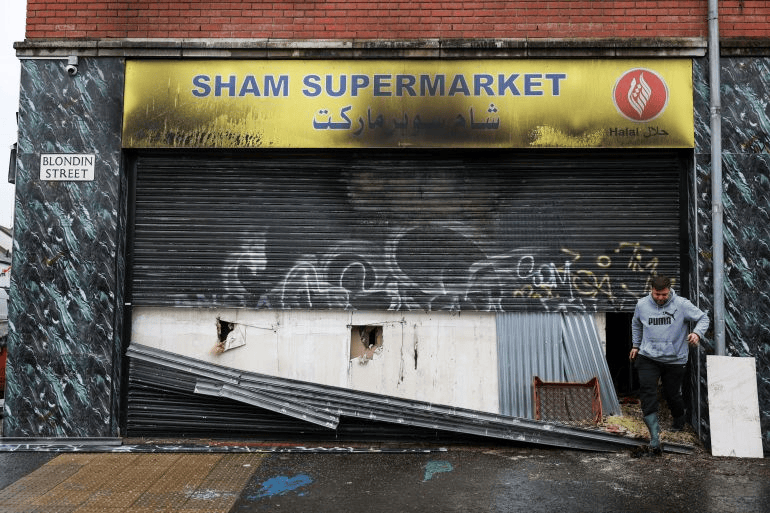
Within hours, vehicles were set on fire, property was damaged, and anti-Islam graffiti appeared on shopfronts. Eyewitnesses reported that some participants appeared to be teenagers and children.
Racist Attacks Target Ethnic Minorities
Human rights organizations say the violence has taken on a strong anti-immigrant and anti-Muslim character. Attackers allegedly targeted homes and businesses believed to belong to migrants, while residents reported feeling intimidated and unsafe.
According to census data, ethnic minorities make up only a small percentage of Northern Ireland’s population. The number of asylum seekers in the region is also relatively low, yet minority communities have faced repeated episodes of organized racist unrest in recent years.
Key facts
Ethnic minority share of population
3.4%
Ethnic minority residents (2022 census)
65,000+
Asylum seekers in Northern Ireland
2,379
Social Media’s Role in the Crisis
Officials and activists have pointed to the rapid spread of inflammatory content online. Lists of businesses and properties circulated on social media, creating fear among residents and traders.
Critics argue that anonymous online agitators can mobilize crowds quickly, disrupt public life, and spread misinformation before authorities have time to respond. Schools, transport services, and businesses were affected by the atmosphere of fear.
Police Under Pressure
Police officers deployed to contain the unrest were themselves attacked with bricks and other projectiles. Riot police were sent to several parts of Belfast as disturbances spread.
Charities working with vulnerable communities say hundreds of people have had to leave their homes temporarily because of safety concerns.
Political Reactions
Political leaders across Northern Ireland condemned the violence, though reactions differed on immigration policy.
- Leaders from nationalist parties called for calm and urged communities not to target innocent residents.
- Unionist politicians acknowledged public concerns about immigration but rejected criminal violence.
- Debates have intensified over border controls, asylum policy, and community relations.
Why This Matters Beyond Northern Ireland
The Belfast unrest reflects a broader pattern seen in parts of Europe and the United Kingdom, where isolated crimes involving migrants can trigger large-scale protests, misinformation campaigns, and racist violence.
Analysts warn that such events can deepen social divisions, damage community trust, and undermine public security if not addressed quickly through law enforcement, political leadership, and community engagement.
The Bigger Picture
The riots have left many ethnic minority families feeling vulnerable and uncertain about their future in Belfast. At the same time, local residents, charities, and community groups have stepped forward to provide shelter and support to those affected.
The coming weeks will test whether Northern Ireland’s leaders can restore confidence, protect vulnerable communities, and prevent further escalation of hate-fueled unrest. The source of this news is Aljazeera.