Pakistan and Afghanistan have once again entered a dangerous phase in their already strained relationship after Islamabad claimed it intercepted four drones launched from Afghan territory into Balochistan. The latest cross-border confrontation has reignited concerns about regional security, border stability, and the future of diplomatic relations between the two neighboring countries.
As military tensions intensify, analysts are warning that the current cycle of retaliation could either lead to renewed diplomatic engagement or push both nations toward a more serious confrontation.
Pakistan Says It Neutralized Afghan Drones
According to Pakistan’s military media wing, the Inter-Services Public Relations (ISPR), four drones allegedly launched from Afghanistan were detected shortly after entering Pakistani airspace and were subsequently neutralized using advanced countermeasures.
The incident occurred hours after Afghanistan’s Ministry of Defense claimed that its air force had conducted operations targeting alleged ISIS hideouts in Pakistan’s Balochistan province and parts of Khyber Pakhtunkhwa.
Both countries have maintained conflicting narratives regarding the recent events, and independent verification of the claims remains unavailable.
Cross-Border Violence Continues to Intensify
The latest drone incident follows a series of escalating security developments between Islamabad and Kabul.
Just days earlier, gunmen attacked a paramilitary facility in Karachi, resulting in the deaths of three security personnel. Pakistani authorities identified one of the suspects as an Afghan national, while the militant group Jamaat-ul-Ahrar claimed responsibility for the attack.
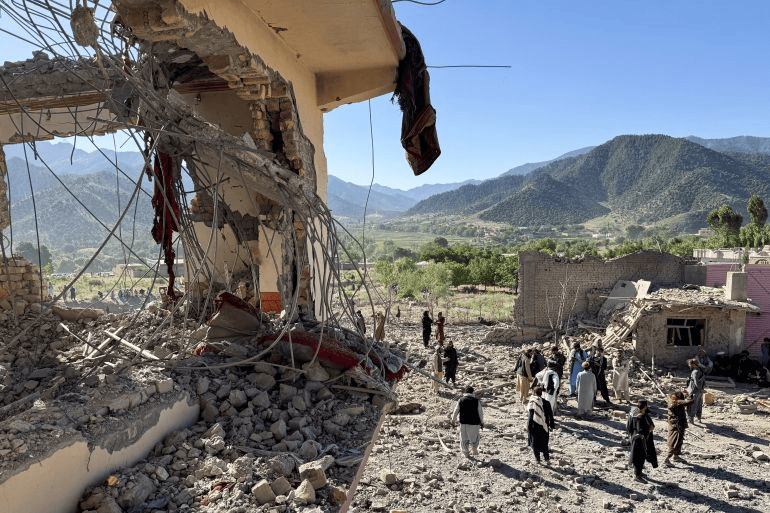
In response, Pakistan reportedly conducted operations targeting militant hideouts in Afghanistan’s Paktia, Paktika, and Kunar provinces. Afghan authorities, however, claimed that dozens of civilians were killed during those strikes.
These incidents reflect a broader pattern of military exchanges that has intensified since late 2025.
Pakistan Faces Rising Security Challenges
Security data suggests that Pakistan’s internal security situation has become increasingly complex over the past year. According to reports cited by analysts, militant attacks across the country increased significantly in 2025, resulting in substantial casualties.
At the same time, multiple reports have documented a rise in drone-related incidents near Pakistan’s western border, creating additional security challenges for Pakistani authorities.
Security experts argue that Islamabad now faces the difficult task of balancing military responses with broader diplomatic and strategic objectives.
Will Pakistan Escalate Further?
Several analysts believe Pakistan may continue pursuing what officials describe as a policy of “controlled escalation” — responding forcefully to security threats while avoiding a full-scale military confrontation with Afghanistan.
According to regional security observers, Pakistan’s recent responses have largely been reactionary, focusing on immediate security concerns rather than long-term conflict resolution.
Experts warn that while both sides have so far avoided a direct large-scale conflict, the continued pattern of retaliation increases the risk of further escalation.
Previous Peace Efforts Failed to Deliver Lasting Results
Attempts to reduce tensions through international mediation have produced only temporary relief.
Diplomatic initiatives involving Qatar, Turkey, and China led to ceasefires and dialogue rounds over the past year. However, these agreements failed to produce a lasting solution as mistrust between the two governments persisted.
Security analysts believe that without meaningful political engagement and confidence-building measures, military exchanges are likely to continue.
Experts Warn Against Blaming External Factors Alone
Some analysts argue that both Pakistan and Afghanistan must address their own internal security challenges rather than attributing all instability to cross-border actors.
Experts emphasize that durable peace will require stronger domestic security frameworks, improved intelligence coordination, and greater political willingness from both governments to address longstanding grievances.
They also caution that continued reliance on military responses without broader strategic reforms could further destabilize the region.
What’s Next for Pakistan and Afghanistan?
The latest drone incident highlights the fragile state of Pakistan-Afghanistan relations and underscores the urgent need for diplomatic engagement.
While neither side appears willing to make major concessions at this stage, analysts agree that continued escalation carries significant risks for regional security, economic stability, and civilian populations on both sides of the border.
As tensions remain high, the coming weeks may prove critical in determining whether Islamabad and Kabul choose renewed diplomacy or continue down the path of confrontation. The source of this news is From aljazeera.