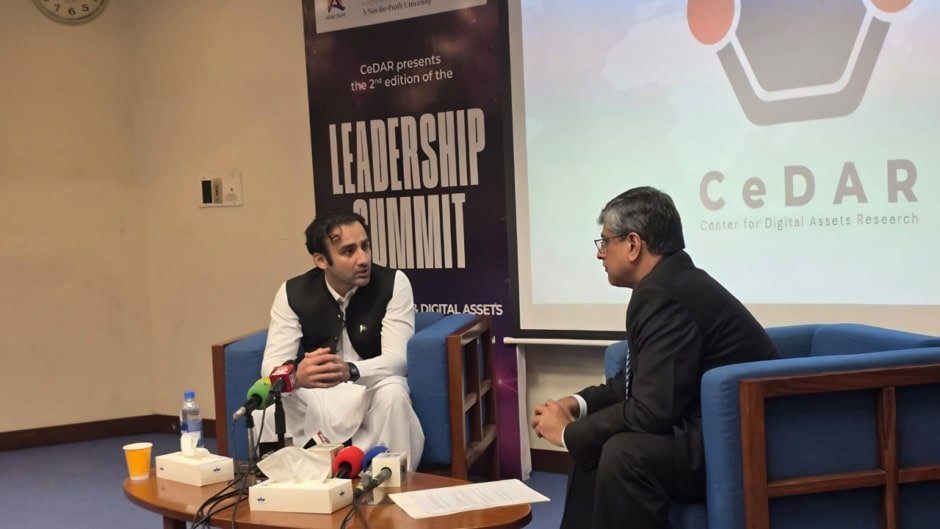
Pakistan is taking a decisive step toward regulating its rapidly expanding digital asset ecosystem. At a high-level summit in Lahore, policymakers and industry experts emphasized the urgent need to bring millions of users into a secure and regulated financial framework.
Hosted by the LUMS Centre for Digital Assets Research, the Leadership Summit on Blockchain and Digital Assets highlighted how Pakistan can transform its informal crypto economy into a regulated, innovation-driven sector.
40 Million Digital Asset Users: A Market Too Big to Ignore
پاکستان میں تقریباً 40 million افراد ڈیجیٹل اثاثوں (cryptocurrency, blockchain assets) سے وابستہ ہیں۔ However, most of this activity exists in unregulated and informal channels, exposing users to:
- Fraud and scams
- Lack of investor protection
- Financial instability risks
According to Bilal Bin Saqib, the government must act quickly to integrate these users into the formal economy.
Bringing this massive user base under regulation will:
- Improve financial transparency
- Strengthen consumer protection
- Encourage local fintech innovation
$38 Billion Remittances: A Key Opportunity
Pakistan receives around $38 billion annually in remittances, making it a critical pillar of the economy.
With blockchain integration:
- Cross-border payments can become faster and cheaper
- Transaction transparency can improve significantly
- Informal money channels can shift into regulated systems
This creates a strong case for adopting blockchain-based financial infrastructure to enhance Pakistan’s global remittance flow.
Regulatory Framework: From Informal to Structured Economy
پاکستان کی حکومت اب ایک واضح crypto regulation framework تیار کر رہی ہے جس کا مقصد ہے:
- ڈیجیٹل اثاثوں کو قانونی دائرے میں لانا
- سرمایہ کاروں کے لیے محفوظ ماحول فراہم کرنا
- عالمی معیار کے مطابق compliance systems بنانا
This approach aligns with global trends in digital finance regulation, blockchain governance, and fintech policy development.
Sandbox Strategy: Safe Innovation Model
A key part of the plan is the introduction of regulatory sandbox environments.
These sandboxes will allow:
- Testing of emerging blockchain technologies
- Controlled rollout of digital financial products
- Risk-free experimentation for startups and institutions
The initial focus will be on asset-backed tokenization, enabling investors to access:
- Real estate assets
- Financial instruments
- Fractional ownership opportunities
This model promotes inclusive investment and digital asset accessibility.
Talent Gap: The Biggest Challenge
While the opportunity is massive, a critical hurdle remains—skilled talent.
Bilal Bin Saqib highlighted that Pakistan needs:
- Skilled blockchain developers
- AI and fintech experts
- Industry-ready professionals
To address this gap, collaboration is needed between:
- Banks and financial institutions
- Technology companies
- Universities and research centers
Continuous learning and upskilling programs will be essential for long-term success.
Impact on Freelancers & Digital Economy
پاکستان کی فری لانس اکانومی بھی اس تبدیلی سے فائدہ اٹھا سکتی ہے۔
With proper regulation:
- Freelancers can receive payments through secure digital channels
- International clients gain trust in compliance systems
- پاکستان کی global competitiveness بہتر ہوگی
This supports growth in remote work, digital exports, and gig economy platforms.
Global Positioning: A Strategic Move
By acting now, Pakistan can position itself as a regional leader in digital finance and blockchain innovation.
Delaying regulation could:
- Increase reliance on risky platforms
- Limit participation in global fintech markets
- Reduce investor confidence
Timely policy implementation is key to staying competitive.
Final Takeaway
Pakistan’s move to regulate 40 million digital asset users is a landmark shift toward a secure, transparent, and innovation-driven financial ecosystem.
With the potential to streamline $38 billion in remittances, strengthen fintech infrastructure, and empower startups, this initiative could redefine Pakistan’s role in the global digital economy.
However, success depends on execution—especially in policy clarity, infrastructure development, and talent building. The source of this news is Tech Juice.
Stay updated with the latest political and economic developments at www.humdardnews.com.