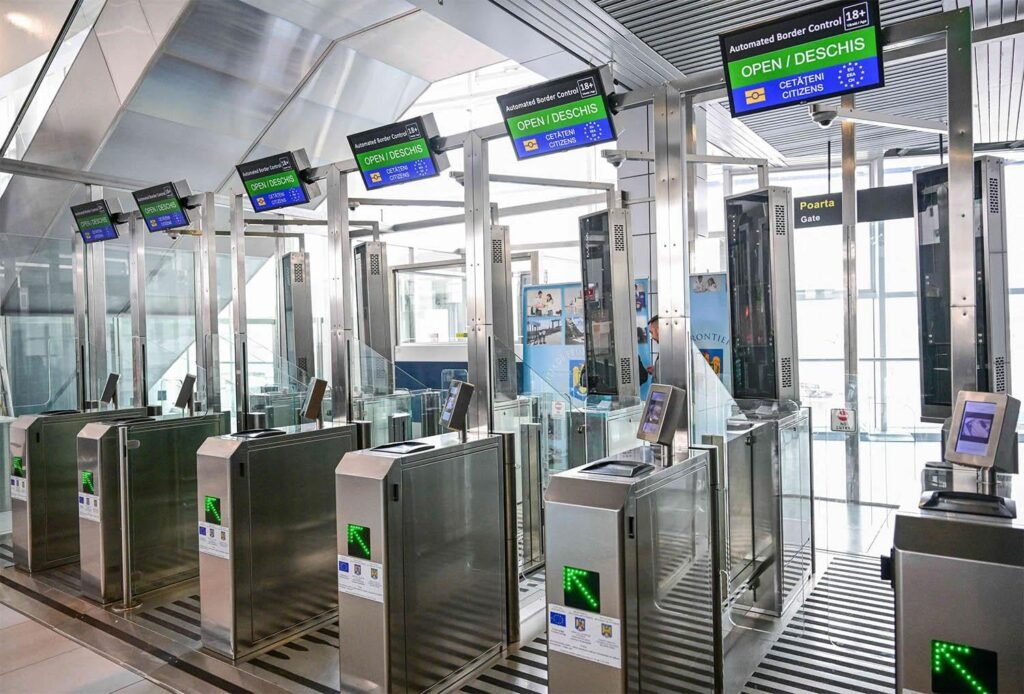
Pakistan’s aviation and national security landscape has entered a critical phase as a $2.4 billion US-backed proposal to upgrade airport security gains attention. Supported by Donald Trump’s administration, the offer promises cutting-edge surveillance systems—but it also arrives at a time when the country is already facing controversy over its E-Gate procurement process.
This development has triggered intense debate around security modernization, transparency, and foreign investment in Pakistan.
What the $2.4 Billion Security Proposal Offers
The proposal comes from Securiport, which plans to deploy Advanced Passenger Information (API) and Passenger Name Record (PNR) systems across major Pakistani airports.
These technologies are globally recognized for:
- Real-time threat detection and risk profiling
- Tracking transnational crime and terrorism suspects
- Strengthening border security and immigration control
Natalie A Baker, the US Charge d’Affaires in Pakistan, has formally encouraged Pakistani authorities to evaluate the proposal, highlighting its strategic importance.
How the Deal Will Work: No Upfront Cost Model
A key feature of the offer is its self-financing structure.
According to Securiport:
- The company will cover all initial investment costs
- Expenses will be recovered through a passenger security surcharge
- The agreement spans a 25-year contract period
Additionally, the firm plans to:
- Establish a local subsidiary in Pakistan
- Train over 1,000 Pakistani professionals in advanced security technologies
This aligns with Pakistan’s goals of technology transfer, job creation, and capacity building.
Government Control & Data Sovereignty Assured
Under the proposed framework:
- Federal Investigation Agency (FIA) will operate the systems
- Pakistan will retain full ownership of all passenger data
- Secure data transmission from airlines to government systems will be ensured
This model emphasizes data sovereignty, cybersecurity, and national control, addressing common concerns about foreign tech involvement.
E-Gate Controversy Adds Complexity
While the US-backed proposal offers a comprehensive solution, it overlaps with an ongoing dispute involving the Pakistan Airports Authority (PAA).
The PAA’s plan to install automated E-Gate systems—featuring biometric verification and facial recognition—has come under scrutiny due to:
- Use of direct contracting rules under PPRA
- Ignoring previous global tenders (2020 & 2024)
- Allegations of lack of transparency in procurement
The E-Gate system aims to reduce passenger clearance time from 5 minutes to under 45 seconds, integrating with:
- FIA’s Exit Control List
- PNR systems
- Interpol databases
Despite its operational benefits, the controversy has raised serious governance questions.
Regulatory Pressure & International Concerns
The issue has escalated further with involvement from:
- Transparency International Pakistan
- International Monetary Fund (IMF)
Transparency International has flagged potential violations of procurement rules, while the IMF has urged Pakistan to reconsider policies allowing direct contracting to state-owned enterprises.
Meanwhile, the Senate Standing Committee on Defence has also raised concerns regarding accountability and compliance.
Strategic Implications for Pakistan
This situation places Pakistan at a crossroads:
Opportunities
- Access to advanced aviation security systems
- Strengthened counter-terrorism capabilities
- Increased foreign direct investment (FDI)
Challenges
- Ensuring transparent procurement processes
- Balancing local vs foreign solutions
- Addressing regulatory and political scrutiny
The decision could significantly impact Pakistan’s aviation sector modernization and global security standing.
What Happens Next?
So far, there has been no official confirmation from Pakistan’s Ministry of Defence regarding acceptance of the proposal. The US embassy has also refrained from public comments on diplomatic communications.
As discussions continue, policymakers must weigh:
- Security needs vs governance concerns
- Speed of implementation vs transparency
- Economic benefits vs long-term commitments
Final Takeaway
The Trump-backed $2.4 billion airport security proposal is more than a financial deal—it’s a strategic decision that could redefine Pakistan’s aviation security infrastructure.
However, with the ongoing E-Gate controversy, the focus is not just on technology, but also on transparency, policy integrity, and public trust.
For Pakistan, the path forward will require careful evaluation, balancing innovation with accountability. The source of this news is Tech Juice.
Stay updated with the latest political and policy developments at www.humdardnews.com.