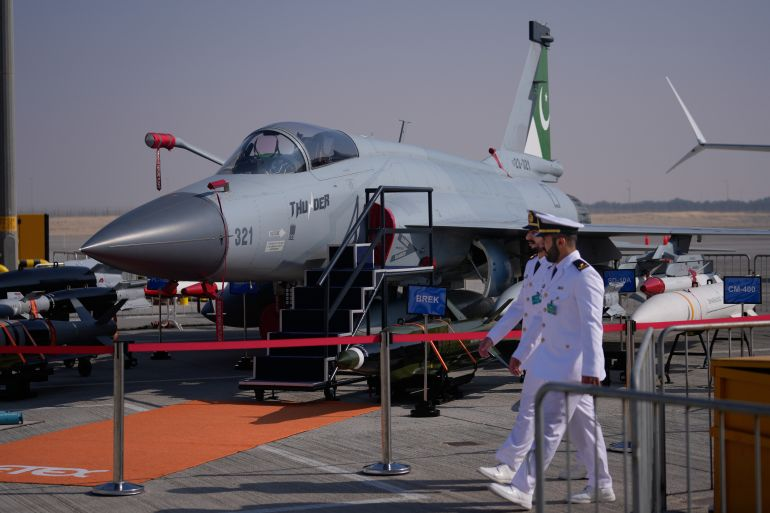
Pakistan’s defence exports are gaining global attention, and the JF-17 Thunder fighter jet is now at the center of this rising interest. Following recent Pakistan–India air clashes and high-level military diplomacy, countries like Bangladesh, Saudi Arabia and Libya have shown interest in buying Pakistan’s locally produced combat aircraft. For Pakistan, this is not just a business move, but a strategic shift in regional and global defence relations.
Pakistan–Bangladesh Defence Talks Raise New Hopes
In early January, Pakistan Air Chief Marshal Zaheer Ahmed Babar Sidhu met his Bangladeshi counterpart in Islamabad. After the meeting, Pakistan’s military said Bangladesh is looking for help to modernize its ageing air fleet and improve radar and air surveillance systems. Discussions also included possible procurement of the JF-17 Thunder and fast-track delivery of Super Mushshak training aircraft.
Bangladesh is modernising its air force, and Pakistan sees this as a chance to strengthen defence ties while promoting its home-grown fighter jet.
Why the JF-17 Is Gaining Global Demand
The JF-17 Thunder is a multi-role, all-weather fighter aircraft jointly developed by Pakistan and China. It is manufactured mainly at the Pakistan Aeronautical Complex (PAC) in Kamra, making Pakistan the primary exporter.
What makes the JF-17 attractive is its balance between cost and capability. Priced around $25–30 million, it is far cheaper than Western jets like the Rafale or Gripen, which cost more than $90 million each. Yet, the JF-17 Block-3 version comes with modern AESA radar, electronic warfare systems, and beyond-visual-range missile capability.
This makes it a strong option for countries with limited defence budgets but serious security needs.
Combat Experience Boosted Its Reputation
The May 2025 air conflict between Pakistan and India changed how many countries view Pakistan’s air power. During the four-day standoff, the Pakistan Air Force claimed to have downed several Indian aircraft using a mix of JF-17s, J-10C jets and F-16s.
Military analysts say Pakistan’s performance against advanced Indian jets like the Rafale improved confidence in Pakistani aircraft, especially the JF-17, which operated as part of the strike formations.
Who Is Already Using the JF-17?
Several countries have already added the JF-17 to their fleets. Myanmar, Nigeria and Azerbaijan are confirmed operators. Azerbaijan recently displayed its JF-17 jets during its Victory Day parade, officially making it the third foreign user of the aircraft.
Now, with interest from Bangladesh, Saudi Arabia and even Libya, Pakistan’s defence exports could grow significantly in the coming years.
Why Pakistan Is Promoting the JF-17 Abroad
Pakistan wants to become a serious player in the global defence market. Selling the JF-17 helps Islamabad earn foreign exchange, build long-term military partnerships and reduce reliance on Western suppliers.
Unlike Western jets, Pakistan offers flexible deals, fewer political conditions, training support and long-term maintenance. For many developing countries, this makes the JF-17 a practical and reliable choice.
Strategic Shift in South Asia
Bangladesh’s interest also reflects changing regional politics. Since its 2024 government change, Dhaka has been looking to diversify defence partnerships, including closer ties with Pakistan and China.
Fighter jet deals are long-term commitments, often lasting 30 to 40 years. If Bangladesh buys the JF-17, it would signal a major strategic realignment in South Asia.
For more defence and security updates, stay connected with www.HumdardNews.com — Pakistan’s trusted source for national and international news.