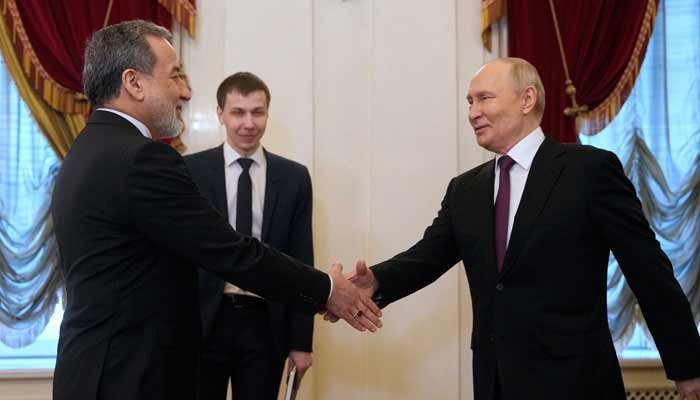
In a significant diplomatic development, Vladimir Putin reaffirmed Russia’s unwavering support for Iran during a high-level meeting with Abbas Araghchi in St. Petersburg. The talks come at a time of escalating geopolitical tensions in the Middle East, signaling a deepening alliance between Moscow and Tehran.
Russia Reassures Iran During “Difficult Period”
During the meeting, held at the Boris Yeltsin Presidential Library, President Putin expressed confidence that Iran would overcome current challenges. Referring to ongoing regional instability, he emphasized hope for peace and stability in the near future.
Putin highlighted that Russia remains committed to standing by Iran, particularly as tensions rise following recent military actions involving the United States and Israel. Moscow has strongly condemned these strikes, positioning itself as a diplomatic counterbalance in the region.
Strategic Partnership Between Russia and Iran Strengthens
The Russia-Iran relationship has evolved into a long-term strategic alliance, especially after both countries signed a 20-year cooperation agreement. Putin confirmed that he recently received a message from Ali Khamenei, reinforcing mutual trust and diplomatic continuity.
Iran’s Foreign Minister Araghchi welcomed Russia’s stance, stating that bilateral ties are expected to grow stronger. He also expressed gratitude for Moscow’s consistent support during challenging times.
Key Developments in Russia-Iran Relations:
- Expansion of economic and defense cooperation
- Continued diplomatic coordination on regional conflicts
- Strengthening of long-term geopolitical alignment
Russia’s Role in Promoting Middle East Peace
Russia has offered to mediate in the ongoing Middle East crisis, aiming to restore calm and prevent further escalation. Putin reiterated that Moscow would “do everything possible” to ensure peace, not just for Iran but for all nations in the region.
One notable proposal includes Russia’s offer to store Iran’s enriched uranium as a confidence-building measure to reduce tensions. However, this proposal has not yet been accepted by the United States.
This move highlights Russia’s attempt to position itself as a key peace broker in global diplomacy, particularly in conflict-sensitive regions like the Middle East.
Nuclear Cooperation at Bushehr Power Plant
A crucial pillar of Russia-Iran collaboration lies in nuclear energy development. Russia is currently constructing two new nuclear units at the Bushehr Nuclear Power Plant, Iran’s only operational nuclear facility.
This project underscores the growing technological and energy partnership between the two nations. It also reflects Iran’s focus on expanding its civilian nuclear capabilities despite international scrutiny.
Military Cooperation and Global Implications
The strategic ties between Moscow and Tehran extend beyond diplomacy and energy. Iran has reportedly supplied Shahed drones to Russia, which have been used in the ongoing conflict in Ukraine. This military cooperation has drawn global attention and criticism, particularly from Western nations.
The deepening defense collaboration signals a shift in global alliances, potentially reshaping international power dynamics.
What This Means for Pakistan and the Region
For Pakistan, the strengthening Russia-Iran alliance holds significant implications. As a key regional player, Pakistan must navigate evolving geopolitical realities carefully. Enhanced cooperation between Moscow and Tehran could influence regional trade routes, energy security, and diplomatic alignments.
Pakistan’s strategic position between major global and regional powers makes it crucial to maintain balanced relations while safeguarding national interests.
Conclusion: A Growing Alliance in a Changing World
The meeting between Putin and Araghchi marks another step toward a stronger Russia-Iran partnership. With shared interests in regional stability, energy cooperation, and geopolitical influence, both nations are aligning more closely than ever. The source of this news is Geo.tv
As Middle East tensions continue to evolve, Russia’s role as a mediator and strategic ally to Iran could significantly impact the global political landscape. For countries like Pakistan, staying informed and strategically adaptive remains essential in this shifting world order.