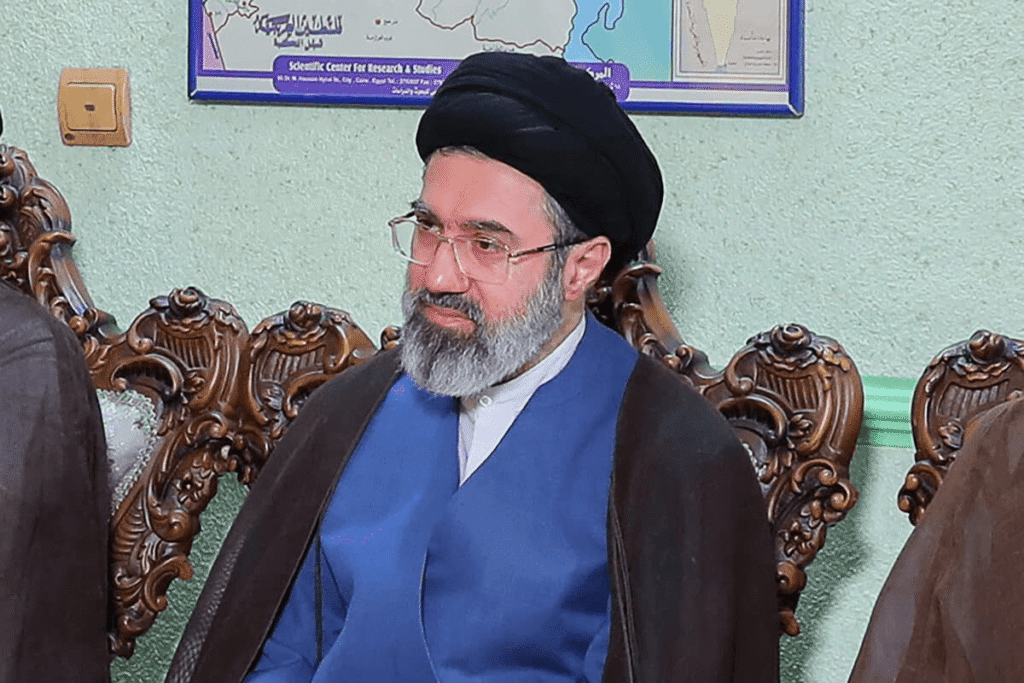
Iran has entered a new political chapter after the death of its long-time leader Ali Khamenei. The country’s powerful clerical body, the Assembly of Experts, has reportedly selected his son, Mojtaba Khamenei, as the new Supreme Leader of Iran. The decision signals that Iran’s hardline leadership is likely to continue shaping the country’s political and foreign policies.
Below is an in-depth look at Mojtaba Khamenei’s background, influence, and the controversy surrounding his rise to power.
Selection by Iran’s Assembly of Experts
According to Iranian media reports, the Assembly of Experts chose the 56-year-old cleric as successor more than a week after Ayatollah Ali Khamenei was killed in an airstrike during the recent U.S.–Israeli conflict with Iran.
A member of the council, Mohsen Heidari Alekasir, said the selection followed guidance that Iran’s leader should be someone strongly opposed by the country’s enemies.
His remarks came shortly after former U.S. President Donald Trump publicly called Mojtaba Khamenei an “unacceptable choice,” highlighting the tense relationship between Tehran and Washington.
A Powerful Figure Behind the Scenes
Although Mojtaba Khamenei has never held a formal government office, he has long been considered one of the most influential figures within Iran’s political system.
Over the years, he gained significant authority during his father’s leadership, acting as a close adviser and a key connection to Iran’s security institutions. Many analysts describe him as his father’s “gatekeeper,” controlling access and shaping internal decisions.
His strong ties with the Islamic Revolutionary Guard Corps (IRGC) have further strengthened his influence. According to analyst Kasra Aarabi, Mojtaba has strong support within the IRGC, especially among younger hardline members.
Early Life and Religious Education
Mojtaba Khamenei was born in 1969 in the holy Shiite city of Mashhad, Iran. He grew up during a politically turbulent era when his father was actively involved in opposition to the Shah before the 1979 Islamic Revolution.
As a young man, he also served during the Iran-Iraq War.
Later, Mojtaba pursued religious studies in the seminaries of Qom, the center of Shiite scholarship in Iran. He eventually gained the clerical title of Hojjatoleslam, which is one level below the rank of Ayatollah.
Unlike his father or Iran’s revolutionary founder Ruhollah Khomeini, critics argue that Mojtaba lacks the highest religious credentials traditionally associated with the Supreme Leader.
U.S. Sanctions and International Criticism
In 2019, the U.S. Treasury Department imposed sanctions on Mojtaba Khamenei. Officials claimed he exercised influence within Iran’s leadership despite never being elected or formally appointed to a public office.
U.S. authorities also alleged that he worked closely with the IRGC’s security networks and helped advance Iran’s regional strategies.
Because of this role, Mojtaba has frequently been criticized by Western governments and human-rights groups.
Controversy and Public Opposition
Mojtaba Khamenei’s rise has been controversial inside Iran as well. Critics argue that his appointment resembles dynastic succession—something many Iranians strongly oppose because the 1979 revolution overthrew a hereditary monarchy.
During nationwide protests in 2022 following the death of a young woman in police custody, demonstrators openly criticized Mojtaba and his influence.
His role has also been questioned by reformist politicians such as Mehdi Karroubi.
Political Alliances and Influence
Mojtaba is widely believed to have supported the political rise of former Iranian president Mahmoud Ahmadinejad, particularly during the controversial 2009 election that sparked widespread protests.
Another potential successor to Iran’s leadership, Ebrahim Raisi, died in a helicopter crash in 2024, which reportedly strengthened Mojtaba’s position as a leading candidate.
Personal Life and Family Connections
Mojtaba Khamenei comes from a prominent political family. His wife, who was reportedly killed during recent airstrikes, was the daughter of well-known Iranian conservative politician Gholamali Haddadadel.
He is also known for wearing the traditional black turban, indicating that his family traces its lineage back to the Prophet Muhammad.
What Mojtaba Khamenei’s Leadership Means for Iran
As Supreme Leader, Mojtaba Khamenei would have ultimate authority over Iran’s key policies, including foreign affairs, defense strategy, and the country’s nuclear program.
His close relationship with Iran’s security establishment suggests that the country’s hardline political direction could continue, potentially shaping Iran’s relations with the West and the broader Middle East in the years ahead.
For many observers, his appointment represents one of the most significant leadership transitions in Iran since the Islamic Republic was founded.