Pakistan has taken a bold and timely step to revive its export economy by activating a new land trade route through Iran. This move is not just about logistics—it reflects a deeper shift in regional trade dynamics, economic survival, and strategic diversification. With traditional routes through Afghanistan disrupted, Pakistan is now exploring alternative pathways to maintain access to lucrative Central Asian markets.
This development carries significant implications for exporters, policymakers, and regional trade partnerships.
Why Pakistan Needed an Alternative Trade Route
For decades, Afghanistan served as Pakistan’s primary land corridor to Central Asia. However, rising border tensions and repeated closures since October last year have severely impacted trade flows. Exporters suddenly found themselves cut off from key markets.
A major example is Pakistan’s agricultural sector. The country produced nearly 12 million tonnes of potatoes, with a surplus of around 4 million tonnes intended for export. With the Afghan route blocked, this surplus created a supply glut, pushing farmers into financial distress.
This crisis highlighted one crucial lesson: Pakistan must diversify its export routes to ensure economic stability.
The Iran Route: A Game-Changer for Trade
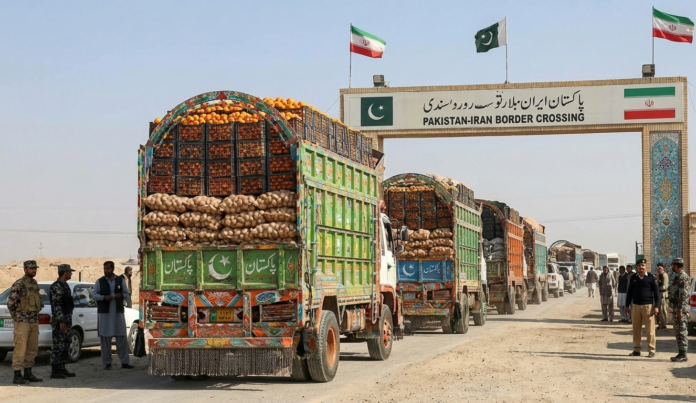
Pakistan has now operationalized a land route via Iran, marking a major shift in regional trade strategy.
- The first shipment of frozen beef was dispatched from Gwadar Port
- It crossed into Iran through the Gabd-Rimdan border
- The final destination: Tashkent, Uzbekistan
This corridor connects Pakistan to Central Asia through Iranian infrastructure, offering a viable and potentially sustainable alternative.
Key Exports Using This Route
Pakistan is now exporting a range of goods through Iran, including:
- Frozen beef
- Fresh fruits (mangoes, kinnows)
- Vegetables (potatoes)
- Rice
- Pharmaceutical products
- Tents and other essential supplies
This diversified export basket strengthens Pakistan’s position in regional trade while supporting domestic industries.
Uzbekistan: A Critical Market for Pakistan
Among Central Asian nations, Uzbekistan stands out as a key destination.
- It accounts for around 39% of Pakistan’s frozen beef exports
- Demand from Uzbekistan has steadily increased over recent years
- Meanwhile, the share of traditional markets like the UAE has declined
This shift makes Uzbekistan a high-priority trade partner. The Iran route ensures uninterrupted access to this growing market.
Easing Banking Restrictions to Boost Trade
To facilitate this new trade corridor, the government has temporarily relaxed financial regulations.
What Has Changed?
- Exporters are no longer required to use formal banking channels
- Letters of credit and advance payment requirements have been waived
- These relaxations apply to selected goods until June 2026
This policy aims to reduce bureaucratic hurdles and encourage exporters to quickly utilize the Iran route.
The Role of Informal Trade and Barter Systems
Trade between Pakistan and Iran has long operated through informal channels due to international sanctions on Iran.
Key Characteristics of This Informal Economy:
- Barter trade mechanisms
- Limited banking integration
- Cross-border family and community networks
- Smuggling of goods like fuel, snacks, and household items
Recently, both countries have even formalized aspects of barter trade under the B2B Barter Trade Mechanism, signaling a shift toward structured yet flexible trade practices.
Rising Demand for Iranian Rial in Pakistan
An interesting economic trend has emerged alongside this trade shift.
- The Iranian rial has surged in value within Pakistan’s informal markets
- Demand has increased due to cross-border trade needs
- Currency speculation is also driving this rise
Despite remaining weak globally, the rial’s local demand reflects growing economic interaction between the two countries.
Strategic Importance of Gwadar and Border Connectivity
The success of this trade route heavily relies on infrastructure.
- Gwadar Port serves as the starting point for shipments
- The Gabd-Rimdan crossing, inaugurated in 2022, acts as a critical gateway
- Proximity to Iran’s Chabahar Port enhances connectivity
This alignment strengthens Pakistan’s role in regional logistics and trade corridors.
Opportunities for Pakistan’s Export Economy
This new route opens multiple growth avenues:
1. Market Diversification
Pakistan reduces dependence on a single transit route and expands into Central Asia.
2. Agricultural Relief
Farmers gain access to export markets, helping stabilize prices and reduce waste.
3. Regional Integration
Stronger ties with Iran and Central Asian states enhance economic cooperation.
4. Long-Term Trade Expansion
If sanctions on Iran ease, this corridor could evolve into a major trade artery.
Challenges and Risks to Watch
Despite its promise, the Iran route comes with challenges:
Informal Trade Risks
Relaxed regulations may lead to under-invoicing and revenue leakage.
Sanctions Pressure
International restrictions on Iran limit full-scale financial integration.
Transparency Issues
Lack of formal banking channels makes tracking export earnings difficult.
Policy Uncertainty
Temporary measures need long-term frameworks for sustainability.
Can This Trade Route Become Permanent?
The future of this corridor depends on several factors:
- Stability in Pakistan-Iran relations
- Improvement in banking and payment systems
- Possible easing of international sanctions on Iran
- Continued demand from Central Asian markets
If managed properly, this route could transform into a permanent trade lifeline, reducing Pakistan’s vulnerability to geopolitical disruptions.
The Bigger Picture: A Shift in Trade Strategy
Pakistan’s decision to use Iran as a transit partner reflects a broader shift:
- From reliance on single routes → to diversified trade networks
- From rigid regulations → to flexible trade policies
- From regional isolation → to strategic connectivity
This evolution is critical in today’s unpredictable geopolitical environment.
Final Thoughts
Pakistan’s new trade corridor through Iran is more than a temporary workaround—it’s a strategic pivot toward resilience and opportunity. By unlocking access to Central Asia, supporting exporters, and easing trade barriers, the country is laying the groundwork for a more flexible and robust economic future.
However, success will depend on balancing ease of trade with transparency, and short-term relief with long-term planning.
For now, this route offers a much-needed lifeline—and a glimpse into Pakistan’s evolving trade ambitions.
Source Pakistan Today
Stay updated with the latest political and economic developments only on www.humdardnews.com